Hands-On History Challenge – Schoolhouse History

You can teach your kids the dates, names, and events, but how do you get them to actually care about history?!
That’s where these monthly challenges come in!
Instead of another lesson to complete, kids get an open ended invitation to explore the past, follow their interests, and make history their own.
Each month, I’ll share a simple, hands-on history challenge with several “choose your own” options. Kids can pick the ideas that spark their curiosity, then take it from there… creating, exploring, researching, and following their interests wherever they lead!
SIMPLE IDEAS… LOW or NO PREP REQUIRED!!
This is not a curriculum or something you have to add to your checklist, there’s no schedule to keep, no particular era in history you need to be studying, and if you miss a month, no biggie!
These challenges have been offered to Fields of Daisies’ email subscribers only until now, but I’m excited to finally share them here so your family can join in, too!
(I’d still love it if you’d subscribe though 🙂 )
To give you an idea, here are the History Challenges we’ve done so far-
+January- Building History Challenge
+February- Cooking Up History Challenge
+March- Say WHAT?!? History Challenge
+April- This Week in History Challenge
+May- Mapping History Challenge
+September- School House History Challenge

September’s Challenge- School House History Challenge
Grab your chalk tablets, sharpen your quills, and step back in time!
For this month’s History Challenge, we will explore what school looked like long ago!
Did Ancient Egyptian kids go to school? How did they learn to add and subtract?
What about the Pioneer kids? Did they do school in those bumpy wagons?
Do you know any famous people in history who were homeschooled?!
Choose one (or more!) of the ideas below for this month’s challenge—or make up your own!
Then send me an email if you’d like your family’s creations to be featured in these posts!
I’d love to hear from you- whether you find these challenges helpful, or not !
Have FUN learning!
+Step 1- Choose your TIME period from history
+Step 2- Research what, how, when, and where kids went to “school” and learned
+Step 3- Choose which challenge you’ll complete
+Step 4- GET SOME HISTORY chat started!
*Challenge #1- I Survived…
Could you survive school in the past?
Imagine walking into your classroom and finding no computers, no pencils, no textbooks, and maybe not even a teacher! Depending on when and where you lived, school could look completely different from what you know today!
Would you survive a day as an ancient Greek student?
Could you handle the rules of a Victorian classroom? YIKES !!
What would you do if your teacher was your older sister? That could be a lot of fun (or not)!!
Ancient Greek students learned music, reading, writing, and had LOTS of PE (physical education!)
Roman children memorized sooo many lessons and practiced giving speeches
Medieval students copyied long manuscripts by hand
Colonial children learned reading, writing, and arithmetic usual with only 2 books
Pioneer kids learned about the land and survival together as they traveled across the plains
+FIND OUT MORE!
Choose one of the above periods of history and study a little bit more about what school was like then!
+Challenge Ideas-
+Create a “School Survival Guide” for a kid from another time period
+Make a list of the strangest school rules you can find from history!!
+Design a historical school schedule for a day. How does it compare to yours?
+Try a school assignment from the past. Try memorization, handwriting, mental math, or EXERCISE routines
+Pack a pretend school bag for a student from another time period
+Draw a comic called “My First Day at a Historical School”
+Write a letter home from the perspective of a kid who just survived their first day of school
+Invent a historical school challenge: What would be the hardest part of attending this school?
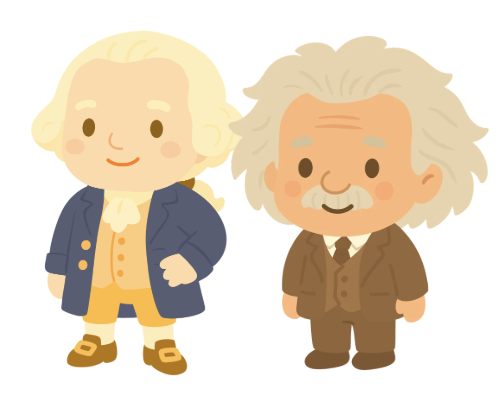
*History Challenge #2- History Homeschooled!
Did you know that many famous artists, inventors, explorers, leaders, and writers were educated at home as children?
In this challenge you will step into the homes, bookshelves, workshops, and imaginations of history’s great thinkers to discover how curiosity, creativity, and a love of learning helped shape their lives!
A few examples-
+Thomas Edison – homeschooled after leaving school and was encouraged to explore his interests
+Albert Einstein – had an unconventional education and spent lots of time just learning independently
+Leonardo da Vinci – learned through his own curiosity to observe how things worked and lots of experimenting!
+Beatrix Potter – educated at home and spent lots of time outdoors learning all she could about nature
+George Washington – educated at home with only a couple of books as a young child
+Abraham Lincoln – had very little formal schooling but was a lifelong reader and learner
+Clara Barton – educated at home and became a teacher
+Meriwether Lewis – received much of his education through reading and independent study
+FIND OUT MORE!
How did these thinkers learn?
What questions did they ask?
What subjects fascinated them?
How did these people turn their interests into discoveries?
Why is creativity important?
+Challenge Activities-
+Create a “Curiosity Notebook”
+Write down questions you wonder about
+Research something you’ve always wanted to know
+Invent Something:
-Draw or build a model of an invention and explain the problem it solves
-Sketch something from nature
-Keep an observation journal
-Create some characters from animals you’ve observed in your backyard & create a mini book about them!
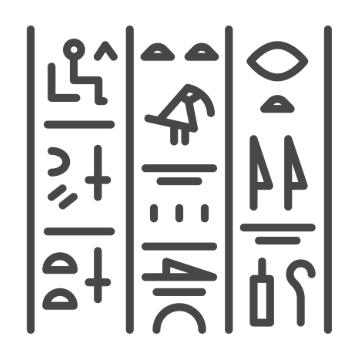
*History Challenge #3- C-A-T spells CAT!
What kids learned in school has changed quite a bit over the centuries!
A child’s lessons often depended on where they lived, what their family’s work was, and what skills were considered important in their culture.
Ancient Egyptian scribes spent years learning to read and write hieroglyphics, along with math and record keeping. Becoming a scribe was an important and respected profession.
Ancient Greek education often included reading, writing, music, poetry, mathematics, physical training, and learning about philosophy and citizenship.
Medieval monks spent countless hours copying and decorating manuscripts by hand. Monasteries became important centers for preserving books and learning during the Middle Ages.
+FIND OUT MORE!
What kinds of school lessons did children have throughout history?
+Kids studying to become Ancient Egyptian scribes
+Kids in Ancient Greece
+A Medieval child working on manuscript writing or illumination letters
+Colonial American children learning from a Bible and a Hymnal
+Challenge Ideas-
+Try a writing lesson from history.
Copy a short passage using hieroglyphic symbols, medieval style lettering, or beautiful old Victorian cursive handwriting.
+Learn a historical skill that school kids might have learned too!
Try something children practiced long ago, such as sewing, playing a musical instrument, memorization, map skills, or penmanship.
+Become the teacher!
Create a pretend lesson for a child living in another time period. What would they study? What supplies would they need? What homework might they have?

However you choose to join the September History Challenge, we’d love to hear about it!
Did you try one of these ideas, create your own project, or discover something really cool?
Leave a comment below and tell us what you did!
You might even give someone else an idea to try!
Happy history exploring!





You May Also Like

Top 10 History Movies For Kids

‘Story of the World’ History Curriculum Plus MORE!

